
Baltic Sea Security
From Situational Awareness to Coordinated Response
Several hours. That may be all the time available to detect, assess and respond to a potential threat at sea.
The Baltic Sea is increasingly well observed. The harder problem begins after something unusual has been detected: how information is combined, how an event is assessed, who is expected to act and how quickly a coordinated response can follow.
This study examines that space between the first signal and the decision to act.
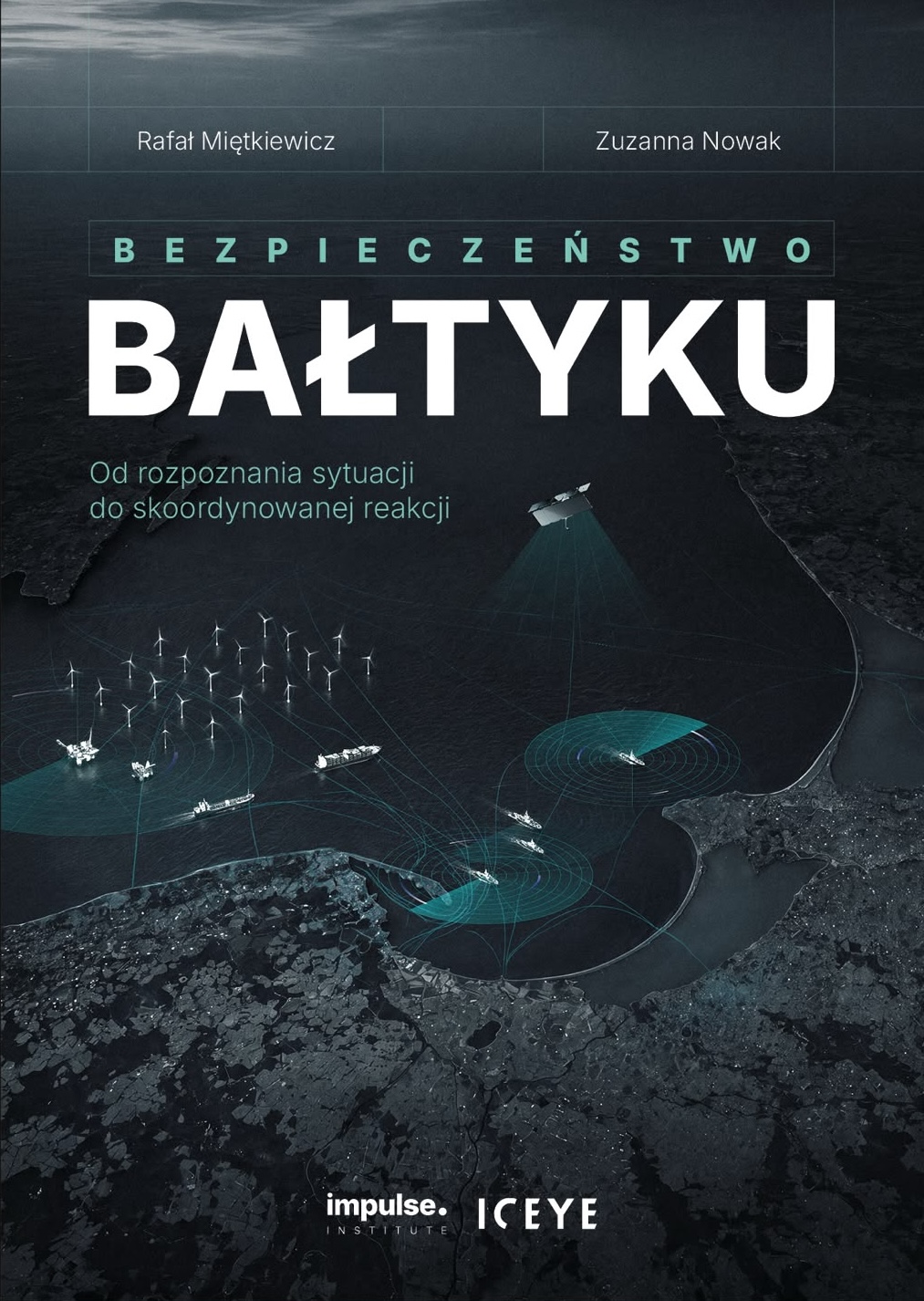
How much time passes from detection to response?
The report argues that better observation only creates an advantage when institutions can turn information into a shared picture, a judgement and an operational decision.What the study looks at
- the Baltic Sea as a strategic operational space;
- the institutions and operators responsible for maritime security;
- the challenge of building a common situational picture from multiple systems;
- the path from anomaly detection to coordinated response;
- the role of satellite technologies within a wider observation architecture;
- implementation priorities for Poland.
Three things to take away
Observation is not the same as security.
The ability to detect an anomaly matters only if it can be rapidly verified, interpreted and connected with what other institutions already know.
The main gap is institutional as much as technological.
Military forces, border services, maritime administration and infrastructure operators work under different mandates and use different information systems. Effective response depends on connecting those perspectives without blurring responsibility.
Time is the metric that matters.
A vessel may cross key parts of the Baltic within hours. Identification, assessment, decision and deployment therefore have to happen on the same timescale.
Authors
Rafał Miętkiewicz
Zuzanna Nowak
Publication details
Impulse Institute
Warsaw
September 2026
Report 1/2026
ISBN 978-83-982914-0-8
Partners
ICEYE
Polish Space Agency
Polska Grupa Zbrojeniowa
ORLEN
Have a question about the study?
Talk to us →